Source Reading Glasses for Office, Travel, and Daily Use
Explore 30 verified options for reading glasses suitable for men, women, and general use. Buyers can compare full and half-frame styles, lens materials, and customization features from manufacturers in China.
Key considerations
Products List


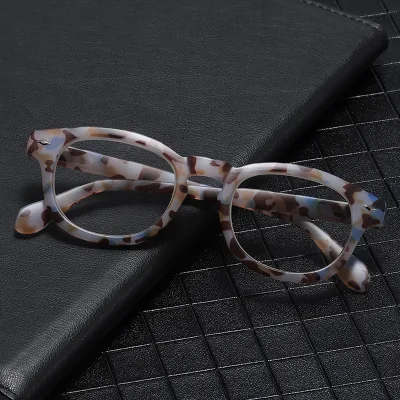
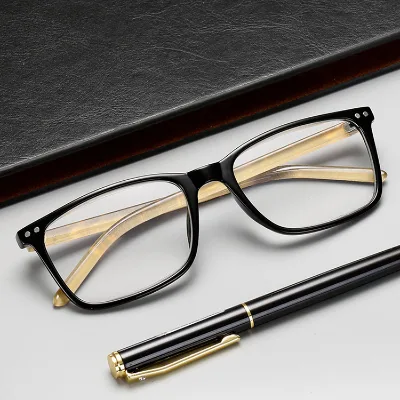


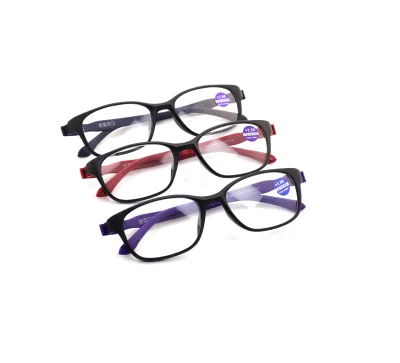
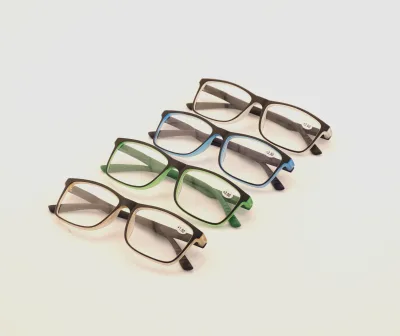


Comprehensive Sourcing Guide
Strategic Sourcing Guide for Reading Glasses
Understanding Product Specifications and Variability
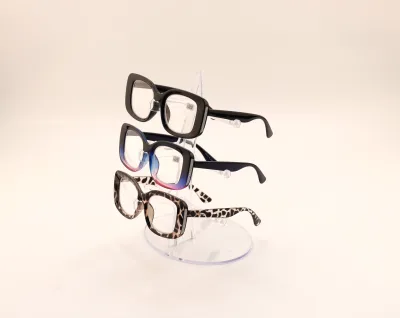
When sourcing reading glasses, buyers must first navigate a landscape defined by diverse technical specifications rather than a single uniform product. The market offers a wide array of configurations, ranging from full-frame designs to half-frame and rimless styles, each serving different aesthetic and functional needs. A critical observation in the current supply chain is the variation in frame materials. Some suppliers offer frames constructed from stainless steel, which provides durability and a premium feel, while others utilize polycarbonate (PC) for lightweight resilience. Additionally, hybrid constructions combining metal and plastic are common, offering a balance between structural integrity and cost efficiency.
The optical properties of these glasses are equally varied. The lens material is predominantly plastic, suitable for standard diopter corrections. Buyers should note that the available diopter range typically spans from 1.00D to 4.00D, with increments of 0.50D, covering the most common reading requirements. However, specific models may offer different ranges, necessitating a direct verification of the optical power availability for each SKU. The lens level is often certified for UV400 protection, ensuring that the eyewear provides a baseline of eye safety against ultraviolet radiation.
Frame geometry also plays a pivotal role in the selection process. The bridge type can vary, with saddle bridges being a standard feature in many designs, while the hinge mechanism is typically standard, though paddle temples are noted in specific slim-profile models. The size of the frames is another variable; some products are designated for "M+" sizes, while others are tailored for specific face shapes, such as the oval face. The color options are extensive, with standard palettes including black, silver, red, blue, and orange, and many suppliers offer customization services to match specific brand identities. This variability means that a single sourcing strategy cannot apply to all products; instead, buyers must align their specific requirements with the precise technical attributes of the models they intend to procure.
Compliance and Certification Verification
In the B2B procurement of reading glasses, verifying compliance with international standards is not merely a formality but a critical risk mitigation strategy. The supply chain for these products, particularly those originating from manufacturing hubs in China, is subject to various regulatory frameworks. Based on available data, several key certifications are frequently cited by manufacturers. These include CE marking, which indicates conformity with health, safety, and environmental protection standards for products sold within the European Economic Area. Additionally, FDA (Food and Drug Administration) compliance is a common requirement, particularly for products marketed in the United States, ensuring that the materials used in the frames and lenses meet specific safety thresholds.
Beyond these general certifications, specific optical standards are often referenced. For instance, the EN 14889:2003 standard is a recognized benchmark for the safety and performance of ophthalmic lenses. This standard covers requirements for impact resistance, optical quality, and labeling. When evaluating potential suppliers, buyers should explicitly request documentation proving adherence to these standards. It is important to distinguish between general product certifications and specific lens-level certifications. Some suppliers may claim that their lenses meet CE/FDA/UV400 standards, while others might provide a broader suite of certifications including ISO standards.
The origin of the product also influences the compliance landscape. Manufacturing locations such as Wenzhou, Zhejiang, and Xiamen are prominent hubs for eyewear production. While these regions have established supply chains, the specific factory's adherence to quality management systems can vary. Buyers should not assume that a product labeled "Made in China" automatically meets all international safety standards. Instead, the procurement process must include a rigorous audit of the supplier's certification documents. This includes verifying the validity of the CE and FDA marks, checking for the presence of the specific EN 14889:2003 standard, and ensuring that any claimed ISO certifications are current and applicable to the specific product line.
Cost Drivers and Pricing Dynamics
The pricing structure for reading glasses in the B2B sector is influenced by a complex interplay of factors, including material costs, customization levels, and order volume. The observed price range for these products can vary significantly, with unit costs potentially ranging from $0.50 to $4.50 depending on the specific model and configuration. This wide variance is driven primarily by the choice of frame material. Stainless steel frames generally command a higher price point compared to polycarbonate or plastic frames due to the raw material costs and the more intricate manufacturing processes involved. Similarly, hybrid frames that combine metal and plastic may fall in the mid-range of the pricing spectrum.
Customization is another major cost driver. Suppliers often offer services to customize logos, frame colors, and even the shape of the frames. While these value-added services are highly desirable for brand building, they inevitably increase the unit cost. The extent of customization required will directly impact the final price. For example, a standard black frame with a generic logo will be less expensive than a fully customized frame in a specific color like orange or red with a unique, customer-specific logo.
Order volume plays a decisive role in the final cost per unit. The Minimum Order Quantity (MOQ) can range from as low as 1 piece for sampling or small trials to as high as 1,200 pieces per model with three colors for bulk production. This tiered structure means that buyers with smaller volume requirements will face a higher per-unit cost compared to those placing large-scale orders. The relationship between volume and price is not linear; there are often significant economies of scale achieved once the order exceeds the standard MOQ thresholds.
Furthermore, packaging requirements can influence costs. Standard packaging often involves individual polybagging, followed by inner boxing (e.g., 12 pieces per box) and cartoning (e.g., 300 pieces per carton). However, if a buyer requires specialized packaging or additional accessories such as cases and pouches, the cost will increase. The gross weight of the product, which can range from 10kg to 12kg per carton, also affects shipping costs, which are a significant component of the total landed cost for international buyers.
Typical Applications and Market Segmentation
Reading glasses serve a broad spectrum of applications, catering to diverse market segments ranging from general consumers to specialized professional users. The primary application is for presbyopia correction, aiding individuals who experience difficulty focusing on close-up objects due to age-related changes in the eye's lens. The availability of diopters ranging from 1.00D to 4.00D makes these products suitable for a wide demographic, covering the most common reading needs.
The market segmentation is further defined by the intended wearer and the style of the glasses. Some models are explicitly designed for men, featuring robust frames and classic designs, while others are marketed as unisex or general-purpose eyewear. The "Slim" style and "Paddle" temple designs are often targeted at consumers seeking a modern, lightweight aesthetic. Conversely, "Full Frame" and "Half Frame" options cater to those who prefer a more traditional or distinctive look. The suitability for specific face shapes, such as the oval face, allows buyers to target niche markets with specific aesthetic preferences.
In the B2B context, these glasses are often utilized as promotional items, corporate gifts, or part of retail bundles. The ability to customize logos and colors makes them ideal for branding campaigns. For instance, a company might order 1,200 units of a specific model with their corporate logo and brand colors to distribute to employees or clients. The inclusion of accessories like cases and pouches enhances the perceived value of the product, making it a more attractive gift or promotional item.
Additionally, the "M+" size designation suggests that some models are designed for larger face structures, addressing a specific demographic that may be underserved by standard sizing. This attention to sizing and fit is crucial for ensuring customer satisfaction and reducing return rates. The versatility of the product line allows suppliers to serve multiple market segments simultaneously, from high-volume retail chains to boutique eyewear stores and corporate bulk buyers.
Supplier Evaluation and Operational Considerations
Selecting the right supplier for reading glasses requires a comprehensive evaluation of their operational capabilities, production capacity, and reliability. One of the first factors to consider is the supplier's location. Major manufacturing hubs like Wenzhou, Zhejiang, and Xiamen are known for their concentration of eyewear manufacturers. However, the specific location can impact logistics, lead times, and communication efficiency. Buyers should verify the exact origin of the product, as "Made in Xiamen" or "Wenzhou Zhejiang China" may imply different logistical advantages depending on the buyer's location.
Lead time is a critical operational metric. The typical delivery time for these products is estimated at 30 to 50 days after the receipt of the deposit. This timeframe can vary based on the complexity of the order, the level of customization required, and the current production load of the supplier. Buyers must factor this lead time into their inventory planning to avoid stockouts. It is also essential to understand the deposit requirements and payment terms, as these can affect cash flow and risk exposure.
Production capacity and flexibility are other key evaluation criteria. Suppliers that offer a wide range of models, such as RM72003, RM72005, RP308072, and LS883788, demonstrate a robust product portfolio. However, the ability to handle large orders, such as the 1,200-piece MOQ with three colors, indicates a capacity for mass production. Buyers should assess whether the supplier can scale their production to meet fluctuating demand without compromising quality.
Quality control processes are paramount. A reliable supplier should have a documented quality assurance system that covers raw material inspection, in-process checks, and final product testing. The mention of specific standards like CE, FDA, and EN 14889:2003 suggests that the supplier is aware of regulatory requirements, but buyers should verify the actual implementation of these standards in the production line. Additionally, the supplier's willingness to provide samples and their responsiveness to inquiries are strong indicators of their commitment to customer service.
Quality Control and Long-Term Procurement Strategy
Establishing a robust quality control (QC) framework is essential for maintaining the integrity of the reading glasses supply chain. Given the variability in materials and manufacturing processes, a standardized QC protocol is necessary to ensure that every batch meets the agreed-upon specifications. This includes verifying the frame material, checking the lens quality for optical clarity and UV400 protection, and ensuring that the packaging meets the required standards.
Buyers should implement a multi-stage QC process. The first stage involves pre-production inspection, where raw materials and prototypes are evaluated against the technical specifications. The second stage is in-process inspection, which monitors the production line to catch any deviations early. The final stage is the pre-shipment inspection, where a random sample of the finished goods is tested for durability, optical performance, and compliance with certifications. This rigorous approach helps to minimize the risk of receiving defective products and ensures that the final delivery matches the buyer's expectations.
Long-term procurement considerations extend beyond the initial transaction. Building a strategic partnership with a reliable supplier can lead to better pricing, priority production slots, and improved communication. Buyers should focus on suppliers who demonstrate a commitment to continuous improvement and adaptability. The ability to customize products, such as changing frame colors or adding logos, is a valuable capability that can evolve with the buyer's brand strategy.
Furthermore, buyers should consider the sustainability and ethical aspects of their procurement. While specific sustainability certifications may not be explicitly mentioned in the provided data, buyers should inquire about the supplier's practices regarding waste management, labor conditions, and environmental impact. This holistic approach to procurement not only mitigates risk but also aligns with the growing demand for responsible business practices in the global market.
By adhering to these guidelines and maintaining a disciplined approach to sourcing, buyers can effectively navigate the complexities of the reading glasses market. The combination of technical expertise, regulatory compliance, and strategic supplier management will ensure a successful and sustainable procurement process.
Comparative Analysis of Key Product Attributes
To facilitate decision-making, the following table summarizes the key attributes observed across the various reading glass models available in the market. This comparison highlights the diversity in specifications, materials, and certifications that buyers must consider.
| Attribute | Model A (e.g., RM72003) | Model B (e.g., RP308072) | Model C (e.g., LS883788) | Model D (e.g., LW883816) |
|---|---|---|---|---|
| Frame Type | Full Frame | Full Rims/Frames | Half Frame | Full Frame |
| Frame Material | Stainless | Metal and Plastic | Metal and Plastic | PC |
| Lens Material | Plastic | Plastic | Plastic | Plastic |
| Suitable For | Man | General | Unisex | General |
| Diopter Range | 1.00d - 4.00d | 1.00d - 4.00d | 1.00d - 4.00d | 1.00d - 4.00d |
| Certifications | CE, FDA | CE/FDA/UV400 | CE/FDA | CE, FDA ISO En 14889 |
| Origin | Wenzhou, China | Wenzhou | Xiamen, China | Wenzhou, China |
| Customization | Logo Available | Frames Color Customized | Shape/Color Customized | Logo Customized |
| MOQ | 1200 PCS/Model | 1200 PCS/Model | 1200 PCS/Model | 1200 PCS/Model |
| Delivery Time | 30-50 Days | 30-50 Days | 30-50 Days | 30-50 Days |
This table illustrates that while there is a common baseline in terms of diopter range and delivery times, significant differences exist in frame materials, certifications, and customization options. Buyers must carefully match these attributes to their specific market needs and regulatory requirements. The consistency in MOQ and delivery time suggests a standardized production process across different models, but the variation in materials and certifications requires a tailored approach to supplier selection and quality assurance.
FAQs
What certifications do these reading glasses meet?
These products typically meet CE, FDA, and EN 14889:2003 standards. Some listings also specify UV400 lens protection levels. Buyers should verify specific documentation for each model to ensure compliance with regional regulations before placing orders.
Which frame materials are available for these glasses?
Available frame materials include stainless steel, polycarbonate, and hybrid metal-plastic constructions. Stainless steel offers durability while polycarbonate provides lightweight resilience. Hybrid options balance structural integrity with cost efficiency for various buyer needs.
Can I customize the logo and frame colors?
Yes, customization for logos and frame colors is available. Suppliers offer options in black, silver, red, blue, and orange, with custom shapes also possible. This service allows buyers to align products with specific brand identities, though it may affect unit costs.
What is the typical delivery time for orders?
The standard delivery time is 30 to 50 days after receiving the deposit. This timeframe depends on order complexity and customization levels. Buyers must factor this lead time into their inventory planning to avoid potential stockouts during peak seasons.
What is the minimum order quantity for bulk purchases?
The minimum order quantity ranges from 1 piece for sampling up to 1200 pieces per model with three colors. Bulk orders often benefit from economies of scale, reducing the per-unit cost significantly compared to smaller trial orders.
Which diopter powers are available for reading correction?
Available diopter powers range from 1.00D to 4.00D in 0.50D increments. This covers common reading requirements for most demographics. Specific models may have different ranges, so verifying the optical power availability for each SKU is essential before procurement.